If we look only at China’s domestic market, 2026 has not been a particularly strong year for the automotive industry. From January to July, vehicle sales in China fell 3.7% year on year, while passenger-car sales declined 5.4%. At the same time, overseas markets have become the industry’s clearest growth driver.
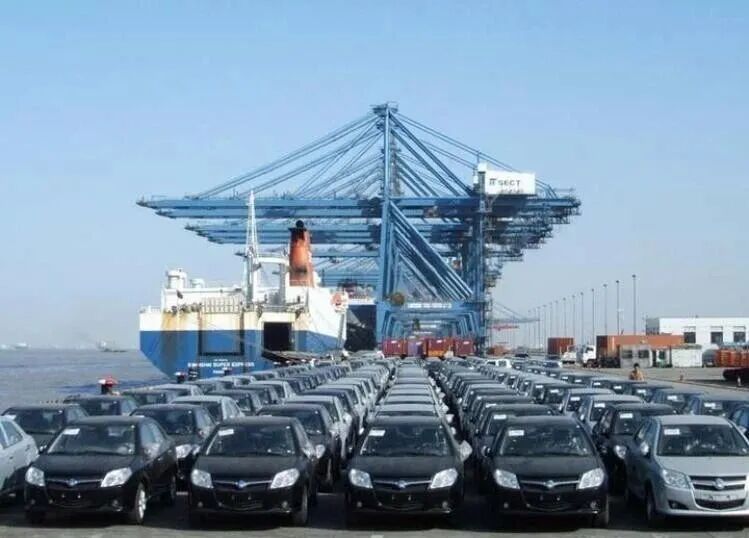
According to the latest data, China exported 6.14 million vehicles in the first seven months of 2026, up 66.8% year on year. In July alone, exports reached 1.043 million units, up 81.3%, exceeding one million for the second consecutive month.
In other words, China’s auto exports are now growing much faster than the domestic market. For exporters, the key question is no longer whether Chinese cars can be sold overseas, but which markets are growing fastest, which models have the strongest potential, and how one-off shipments can be turned into long-term business.
China’s Auto Exports Are Accelerating
From January to July, China exported 5.354 million passenger vehicles, up 72.5%, and 785,000 commercial vehicles, up 36.1%.
Passenger vehicles remain the dominant category, accounting for around 87% of total exports. At the same time, commercial vehicles are also growing rapidly, showing that China’s export mix is becoming more diversified.
The acceleration is particularly clear. Monthly exports exceeded 900,000 units in both April and May, before breaking through the one-million mark in June and July.
For exporters, this is more than a headline number. It signals that overseas markets are becoming an increasingly important source of incremental demand for China’s auto industry.
New Energy Vehicles Are Approaching Half of All Exports
Another major change is the rapid rise of new energy vehicles (NEVs).
From January to July, China exported 2.909 million NEVs, up 120% year on year and accounting for about 47% of total vehicle exports. In July alone, NEV exports reached 553,000 units, up 150%, representing about 53% of total exports.
In other words, NEVs have accounted for more than half of China’s monthly auto exports for two consecutive months.
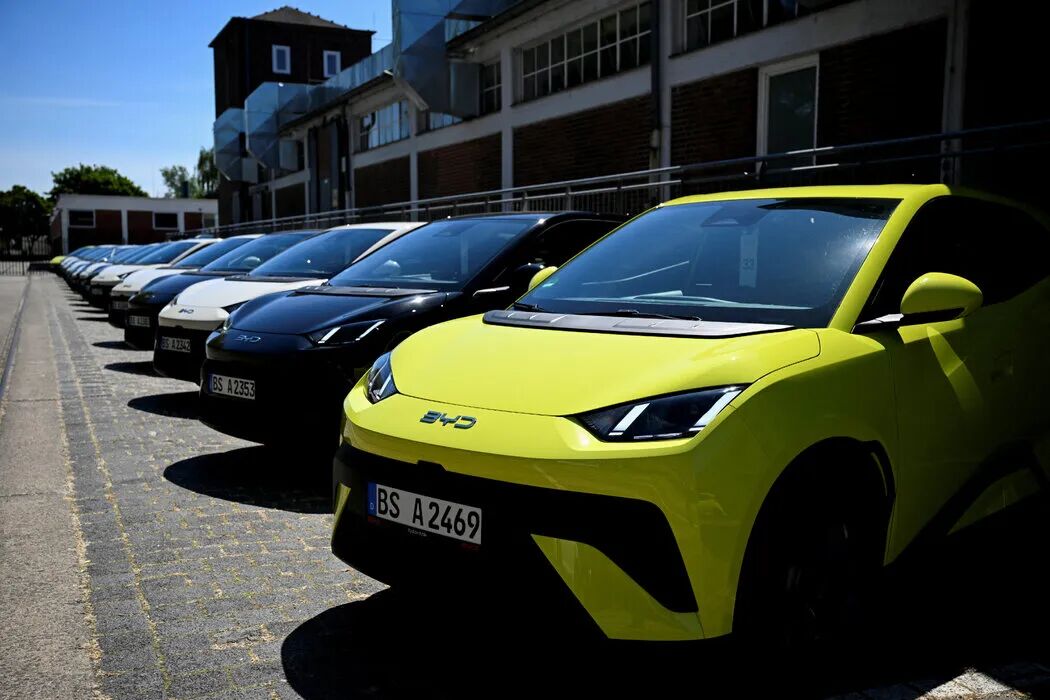
This shows that overseas demand for Chinese vehicles is no longer limited to traditional internal-combustion models. In July, battery-electric vehicles accounted for roughly 32% of exports, plug-in hybrids 18%, hybrids 7%, and conventional fuel vehicles about 35%.
For exporters, this means the future opportunity is no longer limited to traditional vehicle supply chains. NEVs, batteries, charging infrastructure, after-sales services, and related components will all become increasingly important.
Export Markets Are Becoming More Diversified
China’s auto exports are also developing into a more geographically diverse business.
From January to July, major destinations included Russia, Brazil, the UK, Australia, Belgium, Mexico, the Philippines, Italy, the UAE, and Algeria. Russia imported around 543,000 Chinese vehicles during the period, followed by Brazil at about 428,000 and the UK at about 321,000.
These markets represent different types of opportunities: Russia and Brazil are major emerging markets; the UK, Belgium, Italy and Spain represent Europe; Australia is a mature automotive market; and Southeast Asian markets such as the Philippines and Thailand reflect strong growth potential in emerging Asia.
Chinese automakers are therefore moving from a relatively concentrated export model toward a broader global footprint spanning Europe, Latin America, the Middle East, Southeast Asia, and mature markets.
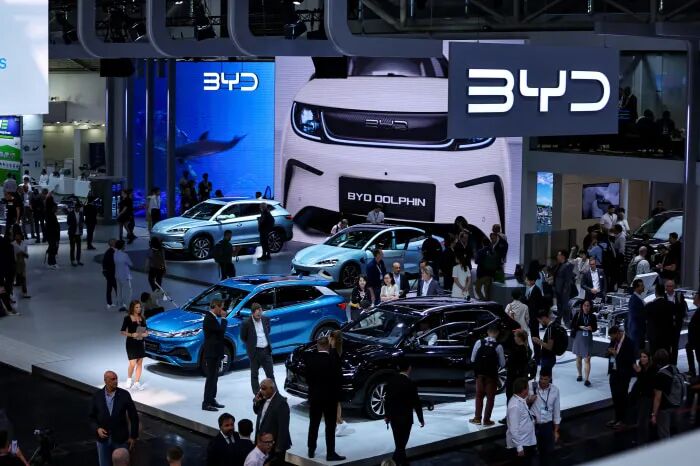
The expansion is even more visible in the NEV segment. During the first half of 2026, leading destinations for Chinese NEV passenger cars included Germany, Italy, the UK, Belgium, Spain, Australia, Thailand, and South Korea.
This shows that Chinese NEVs are increasingly entering established automotive markets, rather than relying only on price-sensitive markets.
But Faster Export Growth Does Not Mean Easier Business
China’s average vehicle export price is around US$18,000, compared with roughly US$50,000–60,000 for major international competitors. Combined with relatively limited margins per vehicle, this highlights a clear gap between export volume and profitability.
That is why Chinese automakers are moving beyond simply “selling products” toward building brands, distribution networks, and localized operations.
In the past, the main question was whether a vehicle could be sold overseas. Today, exporters also need to ask:
Does the vehicle comply with local regulations?
Can the after-sales system keep up?
Can spare parts be supplied reliably?
Are local customers willing to build long-term relationships?
Can NEV, battery, and intelligent-driving technologies obtain the required certifications?
Ultimately, all of these factors affect what exporters care about most: profitability.
Where the 2026 Opportunities May Be
Global automotive demand is becoming increasingly regionalized. From January to July 2026, global vehicle sales grew by around 3%, while China’s sales fell by about 4% and the US market declined by around 3%. Meanwhile, India grew 19%, Thailand 14%, Russia 8%, and Vietnam 29%.
The global market is therefore not growing evenly. Different regions are moving at very different speeds.
For exporters, this means market development can no longer be based on the assumption that “the global market is growing.”

The most attractive markets are likely to be those that combine three factors: strong sales growth, rising acceptance of NEVs and Chinese brands, and increasingly mature import and distribution systems for Chinese vehicles.
Based on current trends, Russia, Brazil, the UK, Australia, and selected Southeast Asian markets deserve close attention.
From “How Many Can We Sell?” to “Where Can We Sell Long Term?”
China’s auto export industry is entering a new phase.
Exports reached 6.14 million vehicles in the first seven months, up 66.8%. Monthly exports have exceeded one million units for two consecutive months, while NEV exports are approaching three million units and already account for more than half of monthly exports.
These figures show that China’s global automotive competitiveness is moving beyond occasional growth and into a period of large-scale expansion.
But for exporters, the real competition is only beginning.

Over the next few years, success will depend not only on pricing and shipment volumes, but also on overseas distribution networks, local warehousing, after-sales service, spare-parts supply, regulatory certification, and brand building.
The broader shift is clear: Chinese automotive globalization is moving from “product exports” to “brand exports” and increasingly to “system exports.”
For auto exporters, the questions that matter most now are no longer simply how many vehicles can be shipped, but where the next wave of growth will come from, which models have the strongest potential, which markets offer better margins, and how a one-time export order can be converted into a stable, long-term overseas customer.